
iFly 737 MAX 8 SP1 for MSFS 2024 – Has This Aircraft Finally Come of Age?
Last Updated: June 2026
iFly 737 MAX 8 parked at the gate with the new SP1 EFB visible in the cockpit.
There are some aircraft that arrive in Microsoft Flight Simulator and immediately become popular. Then there are aircraft that arrive carrying a huge amount of expectation before most people have even flown them.
The iFly 737 MAX 8 firmly belongs in the second category.
Long before the aircraft appeared in Microsoft Flight Simulator, simmers were asking for a high-quality Boeing 737 MAX. While PMDG’s excellent 737 NG series had already established itself as one of the leading airliner products available, many Boeing fans wanted something newer. They wanted the aircraft they were increasingly seeing at airports around the world. They wanted the larger displays, updated cockpit, modern systems and distinctive appearance of Boeing’s latest generation narrow-body airliner.
When iFly announced they were bringing the MAX to Microsoft Flight Simulator, expectations immediately rose.
For Boeing enthusiasts, the attraction was obvious.
- A modern Boeing airliner.
- A highly detailed cockpit.
- The latest generation 737 flight deck.
- Advanced systems simulation.
- A completely different experience from the traditional NG series.
The original release delivered much of what simmers were hoping for. The aircraft looked fantastic, sounded good, and gave Microsoft Flight Simulator users something they had wanted for a very long time.
However, the story didn’t end there.
While the original version was enjoyable, many simmers felt the aircraft still had room to grow. It felt like a product with tremendous potential rather than a product that had fully reached its destination.
After spending time with Service Pack 1, I think that journey has taken a very significant step forward.
I recently installed the latest version, completed a full flight, and recorded a cinematic showcase video for Flight Simulation Showcase. Rather than spending ten minutes exploring the cockpit at the gate, I wanted to experience the aircraft properly. That meant planning a complete flight, using the new EFB, operating the aircraft through normal procedures, and spending time watching it from the outside as well as flying it from the cockpit.
My conclusion was simple.
The iFly 737 MAX 8 no longer feels like an aircraft that is still finding its feet.
It feels like an aircraft that has matured.
What Makes the Boeing 737 MAX Different?
Before discussing the aircraft itself, it’s worth spending a few minutes talking about the real-world Boeing 737 MAX.
At first glance, the MAX looks very similar to the older 737 NG family. Many casual passengers probably wouldn’t know the difference. However, beneath the familiar Boeing shape are a number of important changes.
The MAX was designed to improve efficiency, reduce operating costs, and provide airlines with a more modern aircraft while still retaining much of the commonality that made the 737 so successful.
Some of the most noticeable changes include:
- Larger and more efficient LEAP engines.
- Improved fuel economy.
- Advanced winglet design.
- Updated cockpit displays.
- Modernised flight deck systems.
- Reduced operating costs for airlines.
From a flight simulation perspective, those cockpit improvements are particularly important.
The MAX feels modern.
While I still enjoy flying older aircraft, there is something appealing about sitting in a flight deck that feels contemporary and current. The larger displays and updated presentation help give the aircraft a very different personality compared to earlier generations of the 737.
That modern feel is one of the reasons simmers were so eager to get their hands on a quality MAX simulation.
The Original iFly MAX 8
When the iFly MAX 8 first arrived, I think most people would agree that it was already a very good aircraft.
The cockpit looked excellent.
The external model was impressive.
The aircraft captured the character of the real-world MAX surprisingly well.
Most importantly, it was enjoyable to fly.
However, there were also areas where the aircraft felt like it still had unfinished business.
That’s not unusual for a complex airliner. These products often continue evolving long after release. In fact, many of the most respected aircraft in flight simulation today are the result of years of refinement and development.
The original MAX had a few areas where simmers wanted more.
- The EFB felt functional rather than exceptional.
- Some areas lacked the polish found in more mature products.
- Various features continued evolving through updates.
- The aircraft occasionally felt as though its best days were still ahead of it.
Even so, there was something about the aircraft that kept people interested.
You could see the potential.
You could see where iFly was heading.
The foundations were already there.
The challenge was taking those foundations and turning them into a truly top-tier airliner.
Service Pack 1 Changes the Conversation
This brings us to Service Pack 1.
Sometimes developers release updates that fix bugs and improve stability. Those updates are important, but they don’t fundamentally change how people feel about an aircraft.
SP1 feels different.
After spending time with the latest version, I don’t think it’s unreasonable to describe it as a major milestone for the aircraft.
The headline feature is undoubtedly the new Electronic Flight Bag, but that only tells part of the story.
Throughout the aircraft there are signs of refinement, polish and maturity.
Collectively, these changes make the aircraft feel more complete than it did before.
- A completely redesigned EFB.
- Visual refinements.
- Improved immersion.
- Enhanced sounds.
- Additional aircraft options.
- Numerous fixes and improvements.
Individually, some of these changes may not sound dramatic.
Together, they significantly change the overall experience.
The New EFB Is the Star of the Show
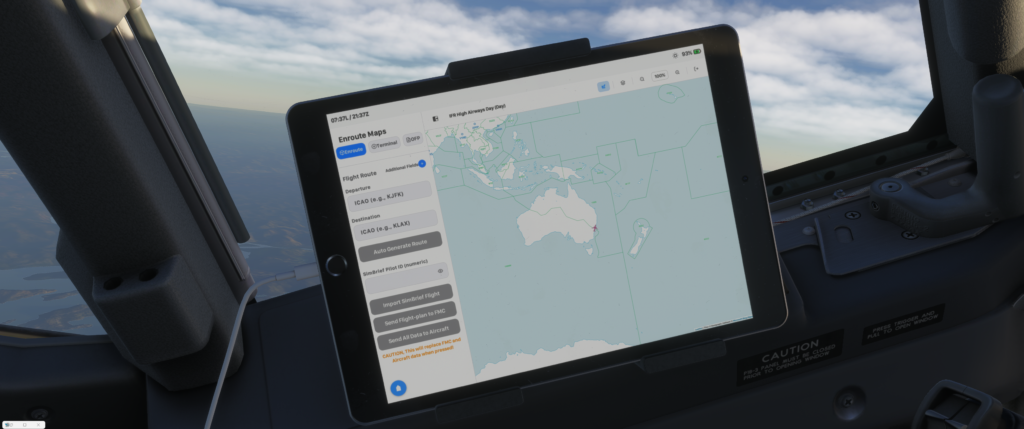
If there is one feature that immediately stands out in Service Pack 1, it is the completely redesigned Electronic Flight Bag.
To be fair to iFly, the original EFB was never bad. It worked, it provided the information you needed, and it allowed you to perform the tasks required to operate the aircraft. The problem was that it never quite felt as polished as the rest of the aircraft.
In a modern airliner like the 737 MAX, the EFB is no longer just an optional extra sitting on the side of the cockpit. It has become an important part of the entire flight experience.
You interact with it throughout the flight process.
- Aircraft setup.
- Payload management.
- Fuel planning.
- Performance calculations.
- Aircraft options.
- Flight preparation.
- Operational information.
Because of this, the quality of the EFB has a much bigger impact on the aircraft than many people realise.
The new tablet-style EFB immediately feels more modern, more polished, and more appropriate for an aircraft like the MAX.
Menus are easier to navigate.
Functions are easier to find.
The presentation is cleaner.
Most importantly, it feels like a natural part of the aircraft rather than an afterthought.
After spending time with the new EFB during a complete flight, I genuinely would not want to go back to the original version.
IMAGE PLACEMENT #2: Close-up cockpit image showing the new SP1 EFB during pre-flight setup.
Recording My First Flight After Updating
Rather than spending a few minutes exploring the update at the gate, I decided to evaluate the aircraft properly.
The best way to do that, in my opinion, is to actually fly it.
So after installing Service Pack 1, I planned a complete flight and recorded footage for Flight Simulation Showcase at the same time.
This turned out to be one of the best ways to experience the update.
Recording a showcase video forces you to spend time with the aircraft.
You notice details that you might otherwise overlook.
You spend more time looking around the cockpit.
You spend more time observing the aircraft externally.
You pay closer attention to sounds, lighting, animations, and the overall atmosphere.
As the flight progressed, I found myself becoming increasingly impressed with what iFly had achieved.
The aircraft simply felt more refined.
Everything seemed to work together more smoothly.
The cockpit environment felt more complete.
The new EFB integrated beautifully into the experience.
Most importantly, I found myself enjoying the flight rather than analysing it.
That is usually a very good sign.
When an aircraft stops feeling like software and starts feeling like an aircraft, the developer has done something right.
Why the MAX Works So Well for Showcase Videos
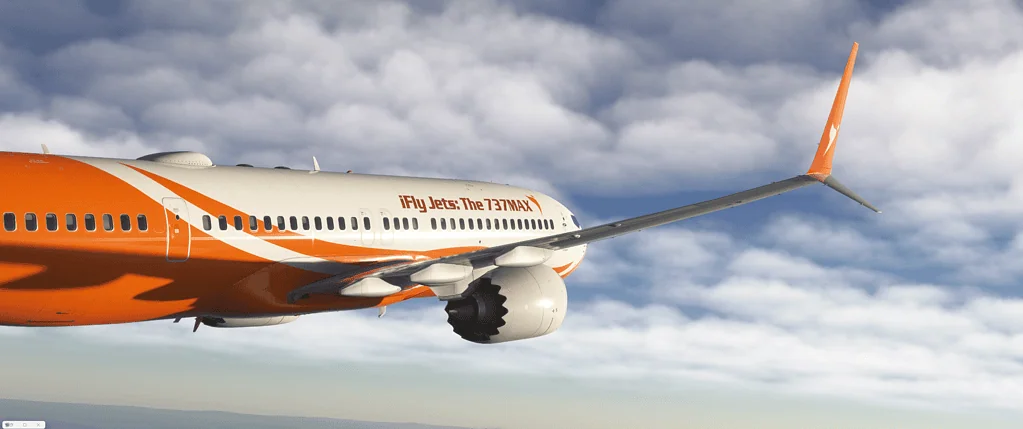
One thing that became obvious while recording footage was just how good the aircraft looks from external views.
The Boeing 737 MAX is a surprisingly attractive aircraft.
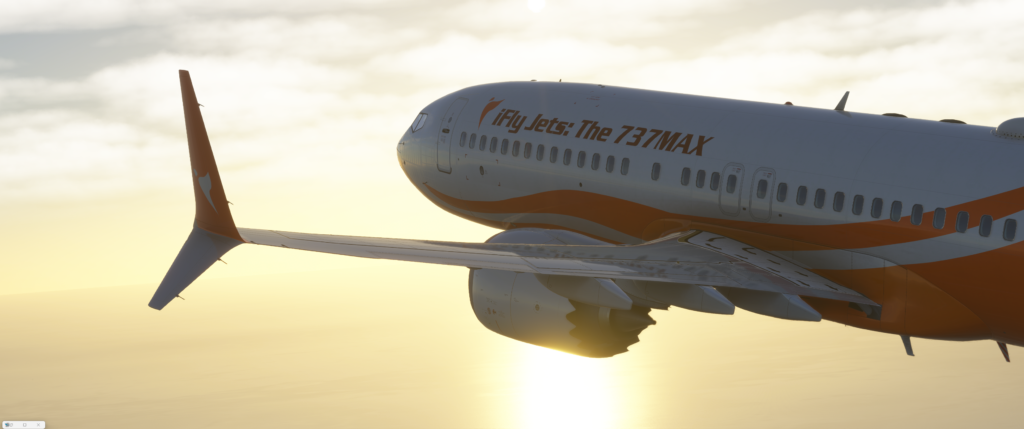
The distinctive winglets.
The larger engines.
The clean modern lines.
The proportions of the aircraft all work extremely well in Microsoft Flight Simulator.
For my showcase video, I focused primarily on the departure and cruise portions of the flight.
That allowed me to capture the aircraft in a variety of situations.
- Climbing away from the departure airport.
- Banking turns after departure.
- External wing views.
- Cruise footage above the clouds.
- Cinematic fly-past style shots.
The MAX is one of those aircraft that looks good from almost every camera angle.
Some aircraft are enjoyable to fly but don’t necessarily look spectacular on screen.
The iFly MAX 8 doesn’t have that problem.
The combination of detailed modelling, excellent lighting, and the distinctive MAX design makes it particularly well suited to cinematic video production.
For content creators, that is actually a significant advantage.
How the Aircraft Feels to Fly
Visuals and features are important, but eventually every aircraft has to answer the same question.
Is it enjoyable to fly?
For me, the answer is yes.
One of the strengths of the iFly MAX 8 is that it manages to feel both familiar and modern at the same time.
If you’ve spent years flying Boeing aircraft, you’ll immediately feel at home.
At the same time, the updated cockpit presentation and modern systems make the aircraft feel like a genuine step forward from older generations.
During my flight, several things stood out.
- The cockpit environment felt immersive.
- The displays were easy to read.
- The aircraft felt stable throughout the flight.
- The sounds added significantly to the atmosphere.
- The EFB improved the overall workflow.
- The aircraft felt mature and well-developed.
Perhaps the biggest compliment I can give it is this.
At no point during the flight was I thinking about whether I liked the aircraft.
I was simply flying it.
That may sound like a small thing, but it isn’t.
The best aircraft disappear.
They allow you to focus on the flight rather than the software.
The latest version of the iFly MAX 8 comes much closer to achieving that than earlier versions ever did.
Visuals, Sounds, and Overall Immersion
Another area that deserves recognition is immersion.
Service Pack 1 feels more polished throughout the aircraft.
The visual quality remains one of its strongest areas.
The cockpit is detailed and modern.
The displays are crisp.
The lighting is attractive during both daytime and nighttime operations.
The external model continues to impress.
- Excellent winglet modelling.
- Highly detailed engines.
- Quality textures throughout.
- Strong lighting effects.
- Excellent external presentation for screenshots and videos.
The sounds have also improved.
Sound is often overlooked when people discuss aircraft add-ons, but it plays a huge role in creating atmosphere.
The aircraft now feels more alive.
The various cockpit sounds, environmental sounds, and engine sounds all contribute to the experience.
Taken together, the visual and audio improvements help create an aircraft that feels more complete than ever before.
Is It Finally Ready to Challenge PMDG?
This is probably the question that many Boeing fans will be asking.
For years, PMDG has been the benchmark for Boeing airliners in flight simulation. Their aircraft are respected for their systems depth, reliability, and overall quality. That’s a reputation that has been earned through years of development and refinement.
The reality is that comparing the iFly MAX 8 and PMDG’s 737 NG series is not always straightforward because they represent different generations of the Boeing 737.
However, some obvious comparisons simmers will naturally make.
- Both aircraft target serious Boeing enthusiasts.
- Both focus on realism and immersion.
- Both provide detailed systems simulation.
- Both are designed for airline-style operations.
- Both appeal to simmers looking for a high-fidelity experience.
Where things become interesting is in the areas where the MAX benefits from being a newer aircraft.
The modern cockpit presentation feels fresh.
The updated flight deck environment feels contemporary.
The new EFB experience is excellent.
The overall package now feels polished enough that comparisons with PMDG are entirely justified.
That doesn’t necessarily mean one aircraft is better than the other.
What it does mean is that iFly has successfully moved the conversation from “Can it compete?” to “Which one do you prefer?”
That is a very different discussion.
Personally, I think that is one of the biggest achievements of Service Pack 1.
The aircraft no longer feels like an alternative to PMDG.
It feels like a genuine competitor.
Who Should Buy the iFly MAX 8?
Not every aircraft is right for every simmer.
Fortunately, the iFly MAX 8 appeals to a fairly broad audience.
I think the aircraft will particularly appeal to:
- Boeing enthusiasts.
- Airline simulation fans.
- Simmers who enjoy modern aircraft.
- Virtual airline pilots.
- Content creators and video producers.
- Users looking for a high-quality long-haul narrow-body aircraft.
If your favourite flights involve realistic airline operations, route planning, cockpit procedures, and spending time learning an aircraft properly, there is a lot to like here.
The aircraft also works surprisingly well for those who enjoy simply loading up a flight and admiring the scenery from cruise altitude.
The combination of the modern cockpit, excellent external modelling, and immersive atmosphere makes it enjoyable even when you’re not focusing on every switch and procedure.
What I’d Like to See Next
Although Service Pack 1 represents a major step forward, there are still things I’d love to see continue developing in the future.
That’s not criticism. It’s simply a reflection of how much potential the aircraft still has.
If I had a wishlist for future updates, it would include:
- Continued optimisation for MSFS 2024.
- Further refinement of the EFB.
- Additional official liveries.
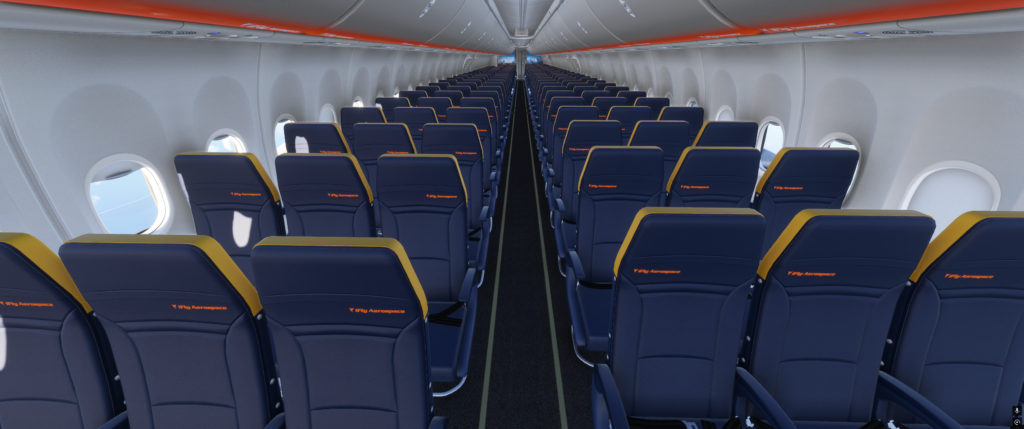
- More cabin immersion features.
- Continued visual improvements where appropriate.
- Further expansion of the MAX family.
The encouraging thing is that iFly appears committed to ongoing development.
If the improvements seen in Service Pack 1 are any indication, the future looks very promising indeed.
Real Pilot Tip
One lesson I’ve learned over the years is that specifications only tell part of the story.
An aircraft can have hundreds of features and still fail to capture your imagination.
The best aircraft are the ones that make you want to plan another flight as soon as you’ve completed the current one.
For me, that’s one of the strongest compliments I can pay the iFly MAX 8 SP1.
After completing my showcase flight and finishing the recording, I immediately started thinking about where I wanted to fly it next.
That’s usually a sign that the developer has created something special.
Final Thoughts
The original iFly MAX 8 was already a good aircraft.
What Service Pack 1 has done is transform it into a significantly better one.
The redesigned EFB is excellent.
The aircraft feels more polished.
The sounds and immersion have improved.
The overall experience feels more mature and complete.
Most importantly, the aircraft is simply enjoyable to fly.
That may sound like an obvious statement, but it’s ultimately the reason most of us buy aircraft add-ons in the first place.
We want aircraft that encourage us to explore new routes, learn new procedures, and spend more time in the simulator.
After spending time with Service Pack 1, I genuinely believe the iFly MAX 8 has become one of the standout Boeing airliners available for Microsoft Flight Simulator.
For Boeing fans, airline simulation enthusiasts, and anyone interested in a modern flight deck experience, this aircraft deserves serious consideration.
It has taken a long journey to get here, but in my opinion, the iFly MAX 8 has finally come of age.
Frequently Asked Questions
Is Service Pack 1 a free update?
Yes. Existing owners of the iFly 737 MAX 8 can update to SP1 without purchasing a new aircraft.
What is the biggest improvement in SP1?
For many users, the redesigned Electronic Flight Bag will be the standout feature. It significantly improves the overall experience and makes aircraft setup much more enjoyable.
Can the iFly MAX 8 compete with PMDG?
In my opinion, yes. While both aircraft have their own strengths, Service Pack 1 has moved the iFly MAX 8 firmly into top-tier territory.
Is the aircraft suitable for Microsoft Flight Simulator 2024?
Yes. My experience with the aircraft in MSFS 2024 has been very positive, and the aircraft continues to improve as development progresses.
Is it good for content creation?
Absolutely. The aircraft’s excellent external modelling, modern cockpit, and attractive wing views make it particularly well suited to cinematic videos and screenshots.
Summary
The iFly 737 MAX 8 SP1 represents a major step forward for one of Microsoft’s most popular modern airliners. The redesigned EFB, improved immersion, refined visuals, enhanced sounds, and overall polish make the aircraft feel more complete than ever before. After completing a full showcase flight and spending time with the update, I believe the aircraft now deserves its place among the very best Boeing airliners available in Microsoft Flight Simulator.
Why This Update Feels Different
One thing became obvious very quickly after I started exploring Service Pack 1.
This doesn’t feel like a normal update.
Anyone who has spent time in flight simulation knows that many updates are largely maintenance releases. They fix bugs, improve stability, and perhaps add a few extra features. Those updates are important, but they rarely change how you feel about an aircraft.
Service Pack 1 feels different.
Instead of simply adding a few new features, this update changes the overall character of the aircraft. The MAX feels more mature, more polished, and more complete than it did before.
That’s actually quite difficult to measure because it’s not one specific feature that creates the impression.
It’s the way everything works together.
As I spent time with the aircraft, I found myself noticing lots of small improvements rather than a single dramatic change.
- The cockpit feels more refined.
- The workflow feels smoother.
- The EFB feels far more modern.
- The aircraft feels more cohesive.
- The overall experience feels more professional.
Individually, none of those things would necessarily transform an aircraft.
Together, however, they make a surprisingly large difference.
It’s similar to owning a car that has just come back from a major service. The engine might not have changed, the steering wheel might still be in the same place, and the car may look exactly the same from the outside. Yet somehow the entire vehicle feels better.
That’s the feeling I had flying the updated MAX.
The aircraft feels like it has reached a new stage in its development.
When the original version was released, I think many simmers saw enormous potential. The foundations were already there, but there were also areas where you could tell the aircraft was still evolving.
Service Pack 1 feels like the point where many of those pieces finally come together.
Rather than feeling like an aircraft with potential, it now feels like an aircraft that is beginning to fully realise that potential.
Perhaps the biggest compliment I can give the update is this: after a while, I stopped looking for changes and simply started enjoying the flight.
That is usually the moment when an aircraft moves from being technically impressive to genuinely enjoyable.
For me, that’s exactly what has happened with the iFly 737 MAX 8 SP1.

- You Know You’re a Flight Simmer When… - 12 August 2026
- Pete’s Ultimate MSFS 2024 Graphics Settings Guide - 1 August 2026
- How to Use GSX with the PMDG 737-800 in MSFS 2024. - 20 July 2026