
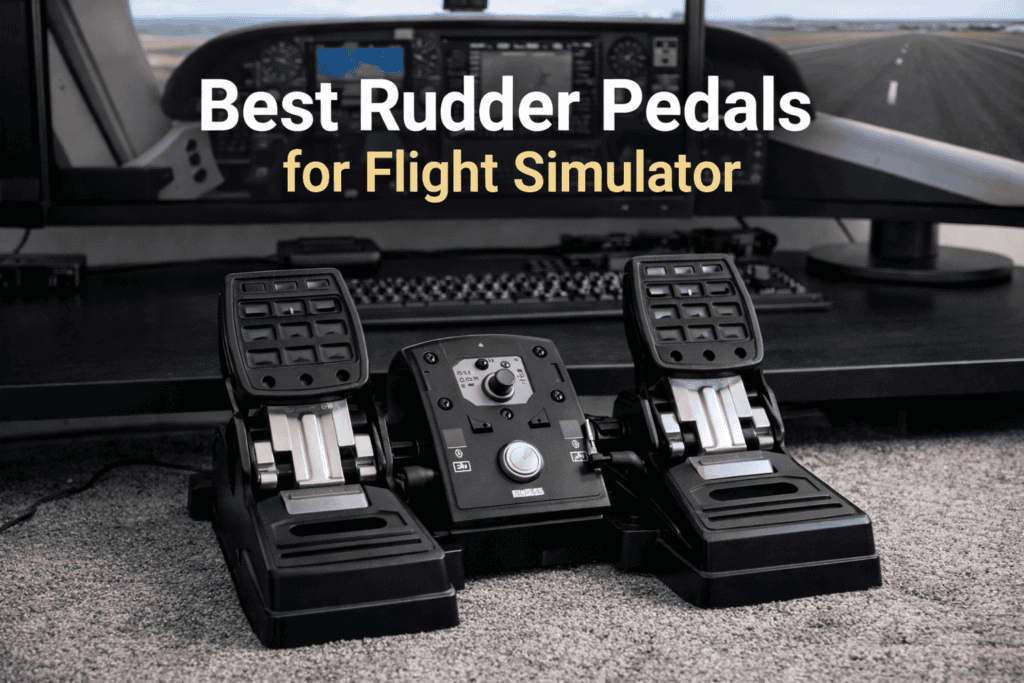
Rudder pedals are an important component of many flight simulator setups. While it is possible to fly Microsoft Flight Simulator without dedicated rudder controls, adding rudder pedals introduces a new level of realism and precision that can greatly enhance the flying experience.
In real aircraft, rudder pedals are used to control yaw — the left and right movement of the aircraft’s nose. They are also used to steer the aircraft during taxi and takeoff, and to assist with coordinated turns while airborne.
This guide explains how rudder pedals work in Microsoft Flight Simulator, why they are useful, and how they can improve both control and immersion in your simulator setup.
What Rudder Pedals Control
Rudder pedals allow the pilot to control the yaw axis of the aircraft. This is the sideways movement that helps coordinate turns and maintain stable flight.
When flying an aircraft, rudder input is often used alongside ailerons to create smooth and coordinated turns. Without rudder input, turns can feel less balanced, and the aircraft may slip or skid.
Rudder pedals are also essential for steering the aircraft on the ground.
Taxiing and Ground Control
One of the most noticeable improvements when using rudder pedals occurs during taxi operations.
In real aircraft, pilots steer the aircraft on the ground using rudder pedals or nose wheel steering linked to the pedals. Using dedicated pedals in the simulator makes taxiing feel much more natural and precise.
This is especially useful at busy airports where careful ground manoeuvring is required.
Crosswind Landings
Rudder pedals are particularly valuable when dealing with crosswind conditions.
When strong winds blow across the runway, pilots must use rudder input to keep the aircraft aligned with the runway during landing. Practicing these techniques in Microsoft Flight Simulator becomes far more realistic when using proper rudder pedals.
Combined Use With Other Controls
Rudder pedals work best when combined with other flight controls such as joysticks or yokes.
Together, these devices allow the pilot to manage pitch, roll, and yaw simultaneously, creating a control experience that closely resembles real-world flight.
For many simulator pilots, adding rudder pedals is one of the most noticeable upgrades they make after purchasing a joystick or yoke.
SUMMARY
Rudder pedals add an important layer of realism to Microsoft Flight Simulator by allowing pilots to control yaw and steer the aircraft on the ground.
They make taxiing more natural, improve coordinated turns, and allow pilots to practice advanced flying techniques such as crosswind landings. For many flight simulation enthusiasts, rudder pedals are an essential step toward building a more complete and immersive simulator setup.
Image description
Flight simulator rudder pedals are placed under a desk used with a home flight simulation setup.